AI Strategy & Readiness→
Assess where AI fits, what to prioritize, and how to move without creating tool sprawl.
Open related service→Practical help with document workflow automation, clearer handoffs, and a more reliable operating loop.
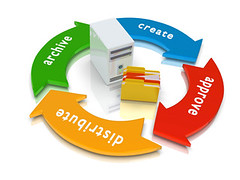
Workflow Automation at AgentHands focuses on document workflow automation as an operating problem, not just a tool decision. The work usually includes mapping how requests or documents enter the business, deciding what should happen automatically, and connecting the right systems so the next action is clear.
For most teams, document workflow automation is not a standalone software purchase. It is a process design problem: capture the right inputs, apply the right rules, route work to the right person or system, and keep exceptions visible instead of burying them in inboxes or chat.
This becomes urgent when documents, approvals, or requests still move through email, spreadsheets, or manual follow-up. People end up checking whether something arrived, figuring out who owns the next step, and fixing the same handoff mistakes over and over.
The cost is not just time. It shows up as slower response cycles, inconsistent records, dropped tasks, and weak visibility into what is actually stuck. Workflow Automation is meant to remove that friction without creating another layer of operational noise.
Agent Hands is an AI-native agency that designs and delivers workflow automation systems tailored to how modern businesses operate. We identify repetitive, manual processes across your operations and replace them with reliable, scalable automations—integrating tools, data, and AI models into a seamless system. The result is faster execution, fewer errors, and more time for your team to focus on high-impact decisions instead of routine tasks.
An engagement usually starts with the current process. Agent Hands looks at intake points, decision rules, dependencies between systems, and the places where humans still need to review or override the flow.
From there, the work moves into design and implementation: define the workflow, connect the systems, handle exceptions, and test the result with the team that has to run it day to day. The goal is a process that is easier to trust and easier to maintain.
What this is a good fit for This service is a strong fit when the team handles repetitive intake, document routing, approvals, onboarding steps, or follow-up tasks that still depend on manual coordination. It is especially valuable when workflows span multiple tools and there is no clear, unified view of how work actually moves through the system.
It is a weaker fit when the core need is still strategic alignment, AI readiness, or internal capability building. In those cases, a strategy or training engagement is typically the right starting point before moving into implementation.
Our expertise At Agent Hands, delivery is led directly by its founders, Alejandro Jimenez and Otto von Wachter. Together, we combine deep experience across AI-driven growth, systems design, and large-scale software engineering.
Alejandro brings a background in digital marketing, analytics, and AI-driven growth systems—ensuring that every automation aligns with business outcomes and measurable impact. Otto brings over two decades of experience in software architecture and system design, leading the technical execution across infrastructure, integrations, and AI implementation.
This combination allows us to approach workflow automation holistically: from identifying high-leverage opportunities, to architecting the system, to building and deploying solutions that operate reliably in production. We don’t just advise—we design, build, and stay engaged until the system performs as intended.
Document workflow automation is the use of software and AI to manage how documents are received, reviewed, routed, approved, and stored without relying on constant manual handling. Instead of people downloading files, forwarding them by email, extracting information by hand, or tracking status across different tools, the workflow is structured so those steps happen automatically based on defined rules and logic. At Agent Hands, document workflow automation is treated as more than document processing alone. It is about designing the full operational flow around the document, how it enters the system, what information needs to be extracted, who needs to review it, what actions should follow, and where the final record should live. When implemented well, it reduces delays, improves accuracy, creates visibility, and helps teams handle higher volumes of work with less friction.
Workflow automation is the use of software, integrations, and AI to move work through a defined process with less manual effort. Instead of relying on people to repeatedly forward files, update records, send reminders, assign tasks, or check the next step, the system handles those actions automatically based on rules, logic, and real inputs. At Agent Hands, we treat workflow automation as a systems design discipline, not just a tool setup exercise. A good automation does more than save time. It reduces errors, improves consistency, creates visibility across teams, and makes operations easier to manage as the business grows. The goal is not to automate everything indiscriminately. The goal is to automate the right steps in a way that is reliable, measurable, and aligned with how the business actually works.
A wide range of workflows can be automated, especially those that involve repetitive steps, predictable decisions, multiple handoffs, or movement of information between systems. Common examples include approvals, onboarding, document routing, lead intake, customer follow-up, internal requests, reporting, data entry, scheduling, and task assignment. Agent Hands typically looks for workflows where work passes through several tools or people before reaching completion. Those are often the areas where hidden inefficiency builds up. For example, a process may appear simple on the surface but still involve emails, spreadsheets, CRM updates, document review, and manual reminders behind the scenes. That is where automation creates the most operational leverage. The best candidates are usually not just repetitive tasks, but repeatable processes with enough structure to be improved without sacrificing judgment or control.
A business is usually ready for automation when repetitive work is consuming meaningful time, manual coordination is slowing execution, or teams are working across disconnected systems with no clear operational flow. Readiness is less about company size and more about whether there are stable processes that happen often enough to justify improvement. Agent Hands helps assess readiness by looking at how work enters the business, how it moves, where it stalls, who is involved, and which decisions can be automated safely. In many cases, the problem is not a lack of tools. It is a lack of process clarity. That is why readiness often starts with identifying whether the workflow is mature enough to automate well. If the process is consistent, high-volume, and operationally important, automation can usually produce immediate value. If the workflow is still changing constantly or ownership is unclear, strategy and process definition may need to come first.
In most cases, no. Workflow automation is not about removing people from the business. It is about removing unnecessary manual effort from the work. The strongest use of automation is to handle repetitive, low-leverage tasks so that people can focus on judgment, problem-solving, customer relationships, quality control, and decision-making. Agent Hands designs automations to support teams, not sideline them. In practice, that means reducing bottlenecks, limiting human error, speeding up routine operations, and making responsibilities easier to manage. Human involvement still matters, especially when a process includes exceptions, approvals, or nuanced decisions. Well-designed systems know when to automate and when to escalate to a person. That balance is what makes automation effective in real business environments.
Implementation time depends on the complexity of the workflow, the number of systems involved, the condition of the existing process, and how much custom logic is required. A relatively straightforward workflow can often be designed and deployed within a few weeks. More complex implementations involving multiple integrations, AI decision layers, custom interfaces, or operational testing can take several months. At Agent Hands, timelines are driven by the actual architecture, not by a generic package. We usually begin with discovery and workflow mapping before defining the right implementation path. This matters because many delays in automation projects come from unclear requirements, inconsistent processes, or underestimating integration dependencies. A strong implementation moves in stages: understand the process, design the system, build the workflow, test it under real conditions, and optimize after launch. That approach produces better results than rushing to automate before the foundation is clear.
Agent Hands selects tools based on the workflow, technical requirements, integration environment, and long-term operational needs of the client. We do not force businesses into a fixed stack just because it is convenient for delivery. The system architecture comes first, and the tooling is chosen to support that architecture. That may include automation platforms, APIs, cloud infrastructure, document processing systems, internal dashboards, AI models, CRM integrations, databases, or custom-built applications. The right setup depends on what the workflow actually needs to do, how critical reliability is, and how the business expects the system to evolve. This is one of the main differences between tactical automation and serious implementation work. Agent Hands does not start with "which tool should we use?" We start with "how should this system operate?" That leads to solutions that are more scalable, maintainable, and aligned with real operational demands.
If this page is close to the real need, send a short brief here instead of starting with chat. The goal is a clearer next step, not a long intake sequence.
Best fit
What to mention
These are the people behind this service. Reach out directly or use the inquiry form above.


These are direct next places to go if the current page is close to the problem but not the exact fit.
Assess where AI fits, what to prioritize, and how to move without creating tool sprawl.
Open related service→Build chat and voice experiences that surface the right information and move users toward the next action.
Open related service→Connect qualification, follow-up, and reporting into a consistent operating loop.
Open related service→Pull structured insight from documents, inboxes, forms, and other unstructured inputs.
Open related service→